KALAMAZOO, MI (WKZO AM/FM) – The City of Kalamazoo says it is implementing a treatment technique change to the public drinking water system to further strengthen corrosion control and protect public health.
Since 1956, the city has used phosphate treatment to control corrosion and sequester naturally occurring iron in drinking water. After nearly a decade of study and testing, the City, working in cooperation with the Michigan Department of Environment, Great Lakes, and Energy, will transition to what they are calling a more optimized corrosion control approach tailored to Kalamazoo’s groundwater chemistry and water system.
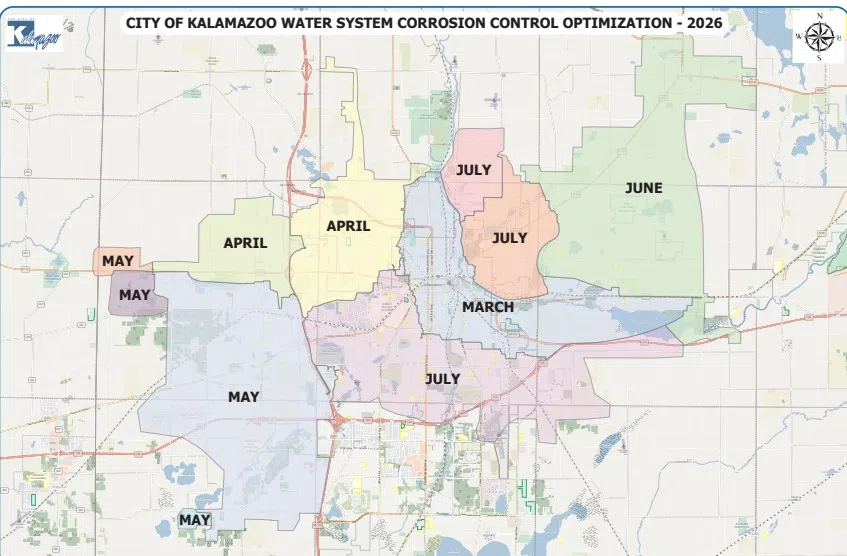
The change will be implemented through a phased rollout, according to a service-area map and schedule, following upgrades at all 13 drinking water treatment plants in the system.
The City is updating the type of phosphate used in drinking water treatment. The existing treatment primarily uses polyphosphate, which is effective at sequestering iron. The new treatment will primarily use orthophosphate, which is more effective at forming a protective lining on the inside of pipes.
The protective lining is designed to reduce direct contact between water and metal surfaces, significantly lowering the risk of metals, especially lead, leaching into drinking water from older pipes, service lines, plumbing solder, or fixtures.
In addition to this treatment update, the City of Kalamazoo plans to replace every lead water service line in the system.
The total project investment is approximately $13 million, funded through the City’s water utility and supported by customer water rates.
During the transition, some customers may notice temporary aesthetic changes, such as discolored water. The city says those changes are not a health concern and may occur when mineral deposits inside pipes are disturbed. Discoloration does not affect the safety of the drinking water.
Customers can find a searchable rollout map at www.kalamazoocity.org/CorrosionControl.




Comments